The Creative Power of a Sweet and Soft Hand-Lettered Script
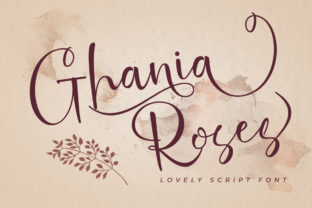
Typography carries an emotional weight that few other design elements can match. When a project calls for warmth, personality, and a touch of handcrafted charm, the right script font transforms ordinary text into something memorable. Ghania Roses embodies this principle through its playful rounded characters and authentic calligraphic feel. Designers who work with it quickly discover that the typeface does more than display words—it communicates tone, intention, and a certain tenderness that resonates with viewers on an instinctive level.
The distinguishing feature of this script lies in its balance. Many hand-lettered fonts lean too far into formality, becoming stiff and difficult to read at smaller sizes. Others swing toward complete casualness, sacrificing legibility for personality. Ghania Roses finds a middle ground with letterforms that feel spontaneous yet remain clean and accessible. The rounded terminals soften each character, creating an inviting visual rhythm that draws the eye naturally across words and phrases.
Understanding the PUA Encoded Swash System
One of the most practical advantages built into this typeface is its PUA encoded swash collection. PUA, or Private Use Area, refers to a range of Unicode characters that font designers can populate with custom glyphs. For the end user, this means decorative alternates and flourishes are accessible without needing advanced design software. Using character maps, glyph panels, or simple copy-paste workflows, anyone can add elegant swashes to beginnings, endings, and connecting letter pairs.
This accessibility changes the creative process significantly. A designer working on wedding stationery can select a swash variant for a capital letter in seconds rather than drawing custom flourishes manually. A small business owner creating social media graphics can add professional calligraphic touches without hiring a lettering artist. The swash system essentially democratizes ornamental typography, making high-end decorative results achievable with minimal technical friction.
How Swashes Elevate Everyday Design
Consider a simple greeting card with the word "Congratulations" across the front. In a standard script, the word appears pleasant but unremarkable. With swash alternates applied to the initial capital and the final descending letter, the same word gains movement and celebration. The eye catches the extended curve at the start, follows the flowing middle characters, and rests on the graceful terminal flourish. This visual journey happens subconsciously, yet it fundamentally alters how the message is received.
The swash library in Ghania Roses covers a thoughtful range of characters. Beginning swashes extend from uppercase letters, creating impressive entry points for names, titles, and headings. Ending swashes trail from lowercase letters, providing satisfying closure. Connecting swashes bridge specific letter pairs that might otherwise feel disjointed. This variety means designers can build custom-feeling compositions while maintaining typographic consistency throughout a project.
File Formats and Cross-Platform Compatibility
The typeface is distributed in both TTF and OTF formats, which addresses compatibility across different operating systems and software environments. TTF, or TrueType Font, offers broad support across Windows and legacy applications. OTF, or OpenType Font, extends functionality with advanced typographic features and tends to perform better in professional design applications like Adobe Creative Suite, Affinity Designer, and similar tools.
Having both formats available means users do not need to compromise based on their preferred workflow. A hobbyist working in a basic word processor can install the TTF version and access the core character set without issues. A professional designer using Illustrator or Photoshop can load the OTF version and take full advantage of OpenType features, including automatic ligature substitution and easier swash access through glyph panels. This dual-format approach respects the reality that creative work happens across many different platforms and skill levels.
Real-World Applications Across Different Audiences
The versatility of Ghania Roses becomes most apparent when examining how different groups put it to use. Each audience brings unique requirements, and the typeface accommodates a surprising range of creative goals.
Wedding and Event Professionals
Invitation designers and wedding stationers form a natural core audience for hand-lettered scripts. The romantic, personalized quality of Ghania Roses aligns perfectly with the emotional significance of wedding materials. Save-the-date cards, invitation suites, place cards, menus, and thank-you notes all benefit from the consistent handcrafted aesthetic this typeface provides.
Beyond the obvious applications, event professionals use the font for signage, seating charts, and decorative elements throughout venues. The rounded characters read well at larger sizes, making them suitable for welcome signs and directional displays. When printed on textured papers or paired with watercolor elements, the letterforms take on an almost painted quality that enhances the overall event design.
Social Media Content Creators
Content creators operating across Instagram, Pinterest, TikTok, and YouTube need typography that stands out in crowded feeds. Ghania Roses offers the visual stopping power that algorithm-driven platforms reward. Quote graphics, announcement posts, tutorial title cards, and story templates all gain personality when set in this script.
The swash system proves particularly valuable in this context. Creators working under time constraints can quickly assemble polished graphics without extensive design experience. A motivational quote overlaid on a photograph becomes more engaging when the key words feature decorative alternates. The authentic feel of the lettering also helps content feel less manufactured, which aligns with audience preferences for genuine, relatable content over overly polished corporate aesthetics.
Small Business Owners and Entrepreneurs
Brand identity development often requires significant investment, yet many small businesses operate with limited budgets. A versatile script typeface allows owners to create cohesive visual materials across touchpoints—logos, packaging, website headers, business cards, and promotional materials—without hiring multiple specialists.
The playful rounded characters work especially well for businesses in creative, lifestyle, wellness, and food sectors. A bakery might use the script for product labels and menu boards. A yoga studio could incorporate it into class schedules and retreat materials. A handmade goods seller might feature it on product tags and market booth signage. In each case, the typeface contributes to a brand personality that feels approachable, caring, and human-centered.
Educators and Resource Creators
Teachers, workshop leaders, and educational content developers face the constant challenge of making materials visually engaging without distracting from instructional content. Ghania Roses works well for headings, section dividers, and highlighting key concepts within worksheets, presentation slides, and classroom displays.
The font's readability at display sizes means students can easily recognize words and phrases. The soft, friendly character shapes help create a welcoming learning environment, particularly for younger audiences or creative subjects. When used sparingly as an accent typeface alongside cleaner sans-serif body text, the script adds visual interest without compromising the clarity that educational materials demand.
Design Principles for Optimal Results
While the typeface is accessible to beginners, understanding a few core design principles helps users achieve professional results consistently.
Pairing matters. Script typefaces rarely work well as the sole font in a project. Pairing Ghania Roses with a clean sans-serif or a subtle serif creates contrast that improves readability and visual hierarchy. The script handles the expressive, attention-grabbing elements while the companion typeface manages body text and functional information.
Spacing requires attention. The natural flow of hand-lettered scripts can sometimes cause letters to feel crowded or disconnected at certain sizes. Adjusting letter spacing and line height ensures the text breathes properly. Most design software offers tracking and leading controls that make these adjustments straightforward once users become aware of the need.
Size influences impression. At smaller sizes, the rounded characters of Ghania Roses remain legible but lose some of their decorative nuance. At larger display sizes, the full character of the letterforms emerges, and swash details become appreciable. Choosing appropriate sizes for different applications—larger for headings and focal points, slightly reduced for secondary information—maximizes the typeface's impact.
Color and texture enhance authenticity. The hand-lettered aesthetic feels most convincing when paired with treatments that echo traditional media. Soft color palettes, subtle textures, and organic compositions reinforce the warmth already present in the letterforms. Digital designs that mimic paper, watercolor, or ink effects create a cohesive sensory impression that audiences find appealing.
The Enduring Appeal of Authentic Hand-Lettered Design
In an era dominated by digital communication and automated production, handmade aesthetics carry special significance. Audiences recognize and respond to visual elements that reference human craftsmanship. The slight irregularities, the flowing connections, and the organic curves of a well-designed script typeface tap into this appreciation, even when the final output is digital or commercially printed.
Ghania Roses captures this authentic feel through letterforms that seem to carry the memory of pen on paper. The rounded characters suggest a relaxed, confident hand—someone writing with care but without tension. This quality translates across contexts, from the most formal wedding invitation to the most casual social media story, because the underlying human character of the typeface remains consistent.
The swash system amplifies this authenticity by allowing users to customize the level of decoration. A minimal composition might use only the standard character set for a clean, modern script look. A more ornate project might layer in multiple swashes, ligatures, and alternates to create something approaching custom calligraphy. This spectrum of possibility means the typeface grows with the user's skills and ambitions rather than imposing a single fixed aesthetic.
Practical Considerations for Long-Term Use
Investing time in learning a typeface pays dividends across future projects. Users who familiarize themselves with the swash locations, character combinations, and optimal pairings for Ghania Roses build a reusable design vocabulary. Templates and style guides developed around the typeface can streamline workflow for recurring project types, whether that means monthly social media content, seasonal product launches, or annual event materials.
File management also deserves attention. Organizing font files, backing up installations, and documenting which format works best for specific software environments prevents frustration when switching between devices or collaborating with others. Since the typeface is available in both TTF and OTF formats, users can maintain parallel installations and choose the appropriate version based on the task at hand.
Licensing considerations vary by foundry and distribution platform. Understanding permitted uses—personal projects, client work, commercial products, digital embedding—ensures compliance and supports the independent designers who create typefaces like this one. Most reputable sources provide clear licensing information that helps users make informed decisions before incorporating the font into high-stakes or widely distributed projects.
Finding Inspiration and Building Skills
Exploring how other designers and creators use hand-lettered scripts opens new possibilities. Online portfolios, design communities, and social media platforms showcase diverse applications that can spark ideas for personal projects. Observing how professionals balance script typefaces with other design elements—photography, illustration, white space, geometric shapes—builds compositional intuition that transfers across all creative work.
Experimentation remains the most direct path to mastery. Testing different swash combinations, varying sizes and colors, and combining Ghania Roses with unexpected design elements reveals what works and what does not. Not every experiment succeeds, but each attempt deepens understanding of how the typeface behaves and what it communicates in different contexts.
The soft, sweet character of this script lends itself to projects where emotional connection matters. Greeting cards, personal letters, commemorative designs, and heartfelt announcements all benefit from typography that feels like it was made by a person rather than a machine. In a world where so much communication feels rushed and impersonal, taking the time to choose letterforms with warmth and personality is itself a meaningful creative act.