Marllisha: A Modern Flowing Script Font for Creatives
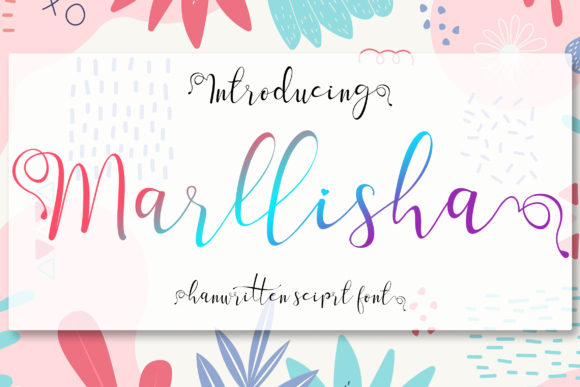
Marllisha is a modern script font with a flowing, expressive character that feels both hand-crafted and polished. Its letterforms sweep across the page with a natural rhythm, carrying the kind of personality that turns ordinary words into something memorable. At its core, Marllisha offers more than a set of pretty letters. It includes alternate glyphs, ligatures, and swashes that let you shape the text exactly how you want it, and because the font is PUA encoded, accessing those special characters requires no advanced technical know-how. Whether you are putting together a wedding invitation suite, sketching a logo concept, or refreshing your brand's visual identity, this font slides into a wide range of projects without demanding that you rearrange your entire workflow around it.
What Gives Marllisha Its Distinct Character
The appeal starts with the letterforms themselves. Each character in Marllisha carries a sense of motion, as if the ink is still settling on the page. The flow is deliberate without being overly formal, which means it can feel warm and approachable in one context and elegantly refined in another. That balance matters more than a casual observer might realize. A script font that leans too hard into formality can feel stiff on a product label or a social media graphic, while one that is too loose risks looking unprofessional in a printed piece. Marllisha sits in a sweet spot where the personality stays strong but the readability does not suffer.
Under the hood, Marllisha packs a number of features that extend its usefulness well beyond basic typing. The alternate glyphs give you multiple versions of certain letters, so you can swap a standard a for one with a longer tail or choose a g with a different loop structure depending on the surrounding letters. Ligatures tie specific letter pairs together into a single, seamless stroke, eliminating awkward spacing issues that often plague script fonts. Swashes add decorative flourishes to the beginning or end of words, which is especially helpful when creating a focal point like a name on a wedding invitation or a headline on a website banner. Because everything is PUA encoded, you can access these extras through your system's character map, glyph panel in design software, or even by copying and pasting from a font guide—no specialized plug-ins or expensive software versions required.
Who Finds the Most Value in a Font Like Marllisha
Different people come to a script font with different needs, and part of what makes Marllisha useful is how it meets several of those needs at once. A wedding stationery designer might care most about the swashes and ligatures that let them customize a couple's names until every curve matches the overall invitation suite. A small business owner who handles their own branding might prioritize ease of use and legibility, needing something that looks professional on a storefront sign without requiring a design degree to implement. A blogger or content creator might simply want a signature-style font for their site's header that feels personal but still reads clearly on a phone screen.
For professionals who work across multiple client projects, the flexibility to shift Marllisha from a logo for a boutique bakery to a print ad for a skincare line without the font feeling out of place is a genuine asset. The alternates and ligatures mean you can dial the formality up or down depending on the brief. Meanwhile, hobbyists crafting handmade cards or scrapbook layouts often appreciate how the PUA encoding removes barriers. They can open a simple word processor or a free design tool, find the swashes they want, and get on with their project instead of troubleshooting compatibility issues.
How Beginners Can Confidently Approach Marllisha
Picking up a new font with a large glyph set can feel intimidating if you are used to typing and calling it done. Marllisha keeps the learning curve manageable. Because it is PUA encoded, accessing the extras follows a consistent logic. On a Windows machine, you can open the Character Map; on a Mac, you can pull up the Font Book or use the glyphs panel in software like Affinity Designer, Canva, or Adobe applications. Many font creators also provide a guide or a PDF showing exactly which characters trigger which swashes and alternates, so you do not have to hunt blindly through hundreds of glyphs.
A practical starting point for a beginner might involve typing out a headline in Marllisha using the default characters first, then identifying one or two spots where a swash could add emphasis. Maybe the capital letter at the beginning of a name gets an extended flourish, or the final letter of a signature word receives a decorative tail. Small, deliberate choices often produce better results than trying to use every available alternate at once. Over time, you develop an eye for where a ligature smooths the flow between two letters or where an alternate glyph resolves an awkward spacing issue.
For someone who creates content sporadically—say, a parent designing birthday party invitations once a year or a student putting together a presentation title—the speed with which Marllisha can elevate a simple piece of text matters. You do not need to master kerning or spend hours adjusting letter spacing. The font's natural flow does a lot of the heavy lifting right out of the box.
Why Experienced Designers Keep Marllisha in Their Toolkit
Seasoned designers tend to build font collections over years, and they become selective about what earns a permanent spot. A script font that sticks around usually does so because it solves recurring problems reliably. Marllisha offers that kind of dependability. The alternate glyphs and ligatures mean a designer can tackle a logo project where the client wants a custom, hand-lettered look without the time commitment of actual hand lettering. The swashes provide enough variety that the same font can appear in different contexts across a brand's identity—on the primary logo, on packaging, and in social media templates—while maintaining a cohesive visual thread.
Another factor that resonates with professionals is the font's versatility across print and digital mediums. The clean curves hold up at large sizes on a poster or signage, while the readable forms do not collapse into illegible shapes at smaller sizes on a mobile screen. Designers who work with clients in industries like beauty, hospitality, lifestyle, and events often reach for fonts that communicate elegance without feeling cold, and Marllisha fits that description well.
There is also a practical workflow consideration. Because accessing the glyphs does not require specialized software or a subscription to a particular platform, a designer can share a brand guide with a client and know the client can actually use the font's features without extra steps. That might sound minor, but anyone who has fielded emails from a frustrated client trying to recreate a look in their own software will understand the value.
Where Marllisha Fits Across a Range of Projects
The use cases for a flowing script font extend further than many people initially assume. Branding and logo design are obvious starting points. A bakery, a florist, a bridal boutique, or a handmade cosmetics line can all benefit from a font that suggests care, craftsmanship, and a personal touch. Marllisha works as the main logotype or as a supporting accent paired with a clean sans-serif for the business name and tagline.
In the world of stationery and event design, Marllisha excels at the detail-oriented tasks that make an invitation suite feel cohesive. Addressing envelopes, setting the couple's names in a prominent script, creating place cards, and designing menu headers all benefit from the font's range. Because you can swap in alternate characters, you can make each guest's name card look individually considered rather than mass-produced, even if you are working from a template.
Content creators and bloggers find script fonts useful for adding personality to featured images, quote graphics, and video title cards. Marllisha's legibility at various sizes means a pull quote overlaid on a photo remains readable on a phone, which is something heavier or more ornate scripts often fail to achieve. A signature-style sign-off at the end of a newsletter or a blog post is another small touch that loyal readers notice.
Product labels and packaging present a slightly different challenge. The font needs to read well at smaller sizes, often on curved surfaces or textured materials. Marllisha's clear letter shapes and moderate contrast between thick and thin strokes help maintain legibility when printed on labels, candle jars, soap wrappers, or food packaging. At the same time, the swashes can add a decorative element to the product name without requiring additional illustration or ornamentation.
How Different Priorities Shape the Decision to Use Marllisha
Not everyone approaches a font purchase or selection from the same angle. Some people care most about ease of use, wanting something that installs quickly and works without hassle. Others prioritize creative control, seeking out fonts with extensive glyph sets that reward time spent exploring and customizing. Still others think in terms of commercial value, evaluating whether a single font can serve multiple purposes across a growing business or a diverse client roster.
Marllisha speaks to several of these priorities at once, but understanding your own main concern helps you use it more effectively. If ease of use tops your list, lean on the default character set and add only one or two swashes per project. The font still carries plenty of personality without the extras. If creative control drives you, set aside time to scroll through the full glyph set and experiment with combining alternates. You might discover letter pairings that become signature flourishes in your work. If commercial value matters most, consider the range of outputs Marllisha can support. A single font that covers your blog header, your product labels, your social graphics, and your client's branding deliverables represents a practical investment in consistency.
Identifying Whether Marllisha Matches Your Goals
Before committing to any font, it helps to look at your current or upcoming projects and ask a few honest questions. Are you frequently designing materials that need a personal, elegant, or hand-crafted feel? Do you need a script font that reads well at both large and small sizes? Would alternate characters and ligatures improve your ability to customize text without switching fonts? Are you or the people you collaborate with comfortable accessing glyphs through a character map or glyph panel, or do you need a font that makes that process as simple as possible?
If those questions point toward yes, Marllisha likely fits your workflow. If your projects lean heavily toward corporate reports, technical documentation, or minimalist branding where a script would feel out of place, a different category of font probably serves you better. That does not diminish what Marllisha offers; it simply reflects the reality that every design choice should serve the project's purpose and the audience's expectations.
For those working across multiple creative disciplines, the font earns its keep by adapting. The same Marllisha that lends a romantic touch to a save-the-date card can bring warmth to a handmade shop's thank-you note or give a distinct voice to a wellness coach's Instagram posts. The common thread is authenticity. In a visual landscape crowded with generic templates and stock styles, a thoughtfully chosen script font with genuine character helps your work feel like it came from a specific person with a specific vision—not from a content mill.
Ultimately, the fonts you choose shape how people feel before they read a single word. Marllisha gives you the tools to guide that feeling toward something personal, polished, and unmistakably intentional.